Coastal Cleanup Events
Want to help care for your local community, harbor, waterways, and marine life? Partner with a local community organization and help keep litter on the shore from entering the water and becoming marine debris!
We promote, encourage, and facilitate proactive partnerships between community groups, volunteers, harbors, and solid waste facilities to keep our harbors and shorelines healthy and clean. Our goal is to provide a central location for volunteers and organizations to find, promote, and participate in cleanup events. Whether you are a resident in a coastal community, spend summers as a seasonal worker, or visit as a tourist, you can play an active role in giving back to Alaska’s marine environment.
By using the Clean Swell data collection app, data from each coastal cleanup goes directly to the Ocean Conservancy and feeds into a marine debris database. This data is used to understand the scale and types of marine debris affecting different areas, research and implement solutions, and advocate for funding. Participating in a cleanup and sharing your data is one of the most tangible ways you can contribute to a cleaner ocean as an individual.
Coastal Cleanup FAQ
-
Leading your first event can seem daunting. Luckily, Ocean Conservancy has your back and has created a Cleanup Toolkit for shore based cleanups or Watercraft and Marina Cleanup Toolkit for boat/harbor based cleanups. These are excellent resources and contain everything you need to get started.
-
Cleanup events often coincide with the end of Spring (April-May) and/or the start of Fall (September-October). Planning around snow cover/harbor traffic is important for ensuring a successful cleanup.
The days after a busy holiday (July 4th, Memorial Day) are also excellent opportunities for a coastal cleanup.
-
If your cleanup will take place on harbor, city, or private property, it is critical to coordinate your cleanup/get permission from the harbormaster, municipal government, or landowner ahead of time.
-
If you are an organization leading an event, we highly recommend using liability waivers to protect your organization in the event of an accident. Coastal cleanups often occur on uneven ground or in industrial areas and can involve sharp or toxic objects. Here is an example from the Nature Conservancy.
If you are on harbor or park property, it is likely they have their own waiver which volunteers should sign.
-
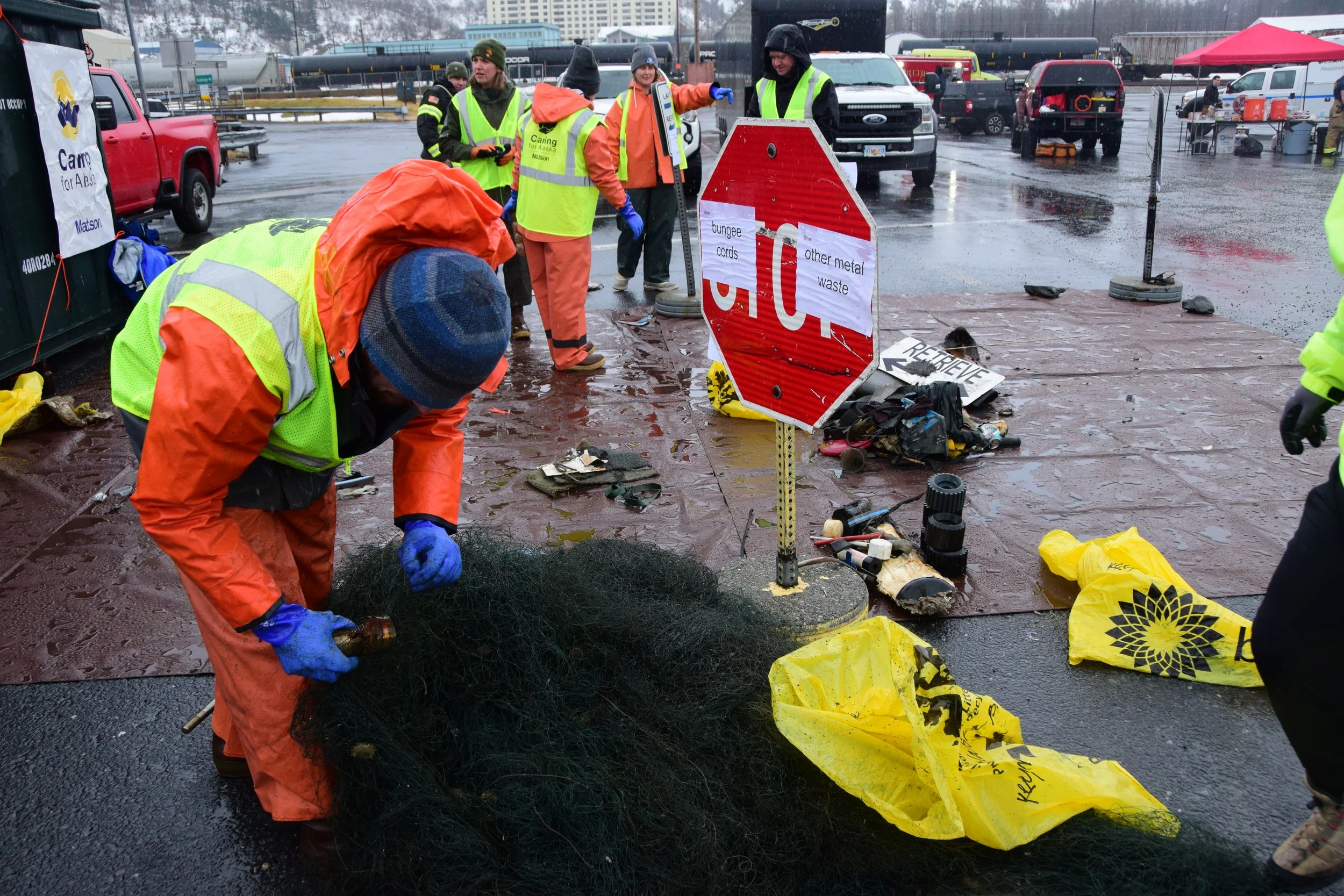
Part of the planning process is coordinating with the harbormaster and/or community’s solid waste department to determine where to put the litter you collect. If possible, find out what the community accepts for recycling and set up a sorting station with volunteers.
Alaska Clean Harbors or our community partners can help facilitate these working relationships if you are unsure who to talk to.
-
During the cleanup, designate a person to fill out data cards or enter data into Ocean Conservancy’s Clean Swell App on the types of litter you encounter. Weigh the trash using a scale with a hook scale or stepping on and off a standard scale while holding the trash bag and removing your weight from the total. If you don’t have a scale, estimate 15 pounds per bag.
This data is collected and helps convey the scale of marine debris to policy makers and the public and identify the most common waste types.
-
Large companies such as Matson, Alyeska Pipeline, Northern Starr, and AML have been known to provide funding and resources for cleanup events.
Grant Funding is sometimes available for larger or more remote marine debris cleanups. Contact the Ocean Conservancy to learn more or get information on what grants are available.
The more we are able to collectively bring awareness to the issue of marine debris and demonstrate the importance of cleaning it up for our communities, the easier it will be to advocate to fund solutions.
-
Let us know about your cleanup so we can help promote it and connect you with organizational partners which can support your efforts and publicize the event to attract volunteers.
Also, be sure to document and share your cleanup with lots of good photos and videos - cleanups are contagious and sharing your hard work is the easiest way to get more people involved!
-
Celebrate! Cleanups are hard work - try to coordinate some food, snacks, refreshments, etc. to have on hand so that people can relax afterwards and spend some time together. Getting together as a community as one of the best parts of picking up trash.
Need Support?
With help from our partners, Alaskans for Litter Prevention and Recycling (ALPAR) and the Ocean Conservancy, volunteers can often get access to the following resources to help run a coastal cleanup event:
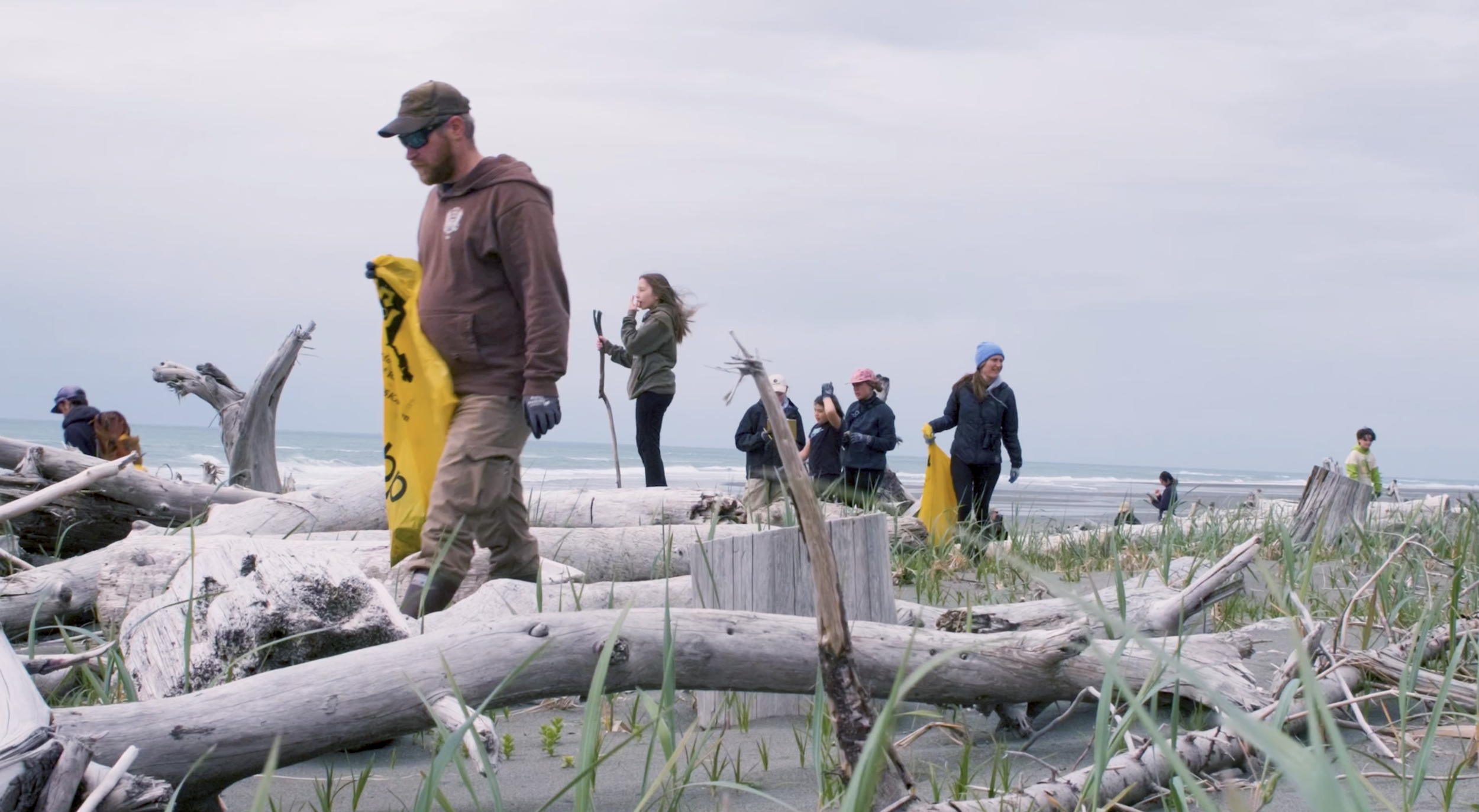
Safety vests, gloves, yellow plastic collection bags, and data cards for gathering garbage through partnerships with ALPAR and the Ocean Conservancy.
Support in gaining cooperation from local landfills or harbors to receive garbage generated during the cleanup free of charge.
Public recognition and promotion of your cleanup on our social media and webpage.
Support and guidance to help plan and organize an event - if you aren’t already affiliated with a group, but want to start a cleanup, we can help connect you to resources and community members that will help.
Find a Local Organization to Work With
Looking to connect with a municipality or an organization spearheading cleanups in a community you care about? Use the following map to make it happen.
Whether you live in a coastal community or are just passing through, participating in a cleanup event is a great way to make friends, give back, and make a tangible difference in reducing marine debris and plastic pollution.